
Overview of CPS11D and CPS71D
CPS11D and CPS71D are both digital electrodes commonly used in industrial online pH measurement, manufactured by Endress+Hauser. Both use Memosens digital technology, but their design orientations and application scenarios differ. Understanding their differences helps in proper selection.
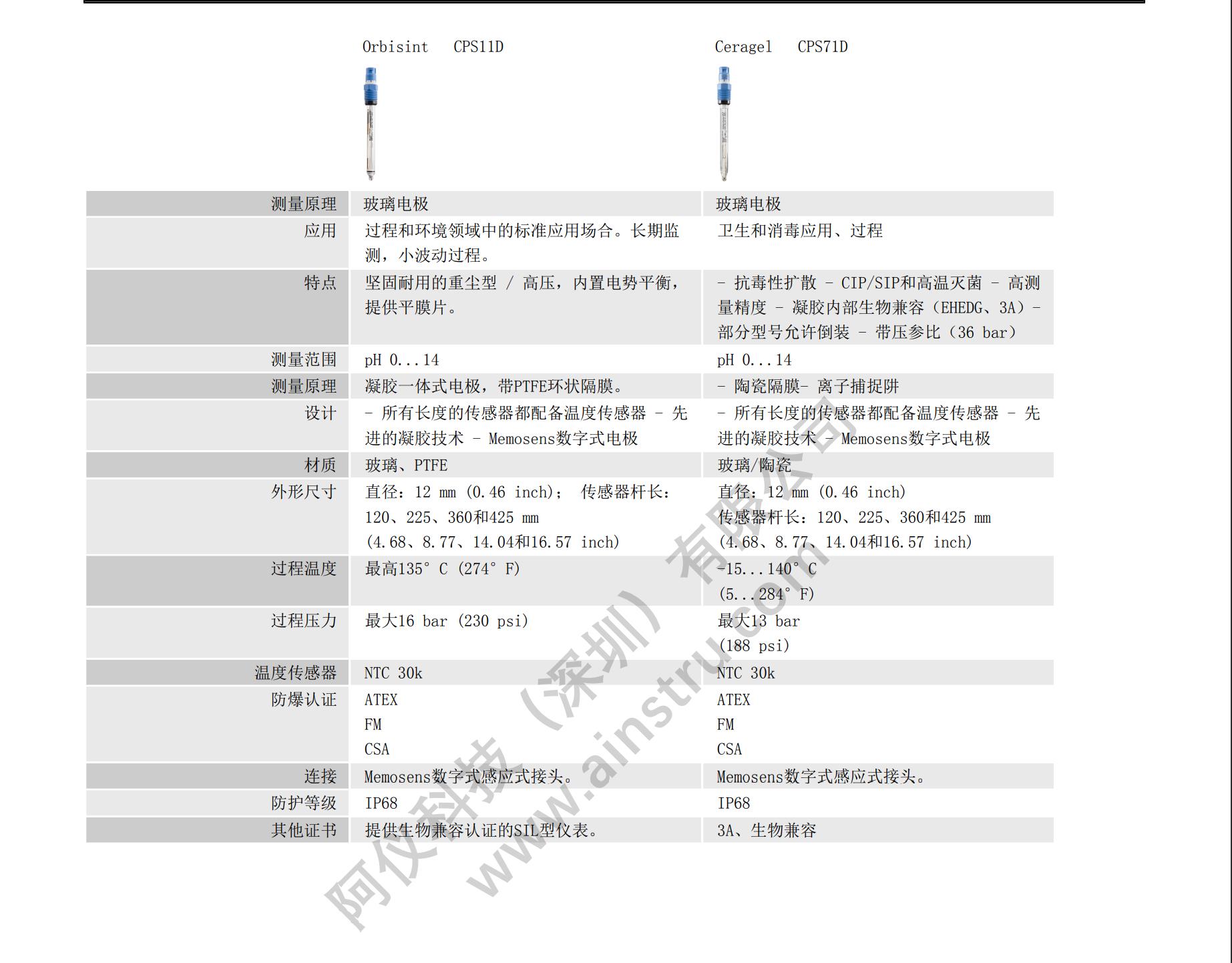
Core Differences Comparison
Measurement Principle and Structure
- CPS11D: Uses a glass electrode, suitable for routine pH measurement, fast response, high accuracy.
- CPS71D: Uses ISFET (Ion-Sensitive Field-Effect Transistor) technology, no glass bulb, resistant to mechanical shock, suitable for harsh conditions.
Applicable Conditions
- CPS11D: Suitable for clean water, drinking water, process water and other low-contamination, low-wear applications.
- CPS71D: Suitable for media with high contamination, high wear, strong alkali, solid particles, such as papermaking, chemical, wastewater treatment.
Technical Parameters Comparison
| Parameter | CPS11D | CPS71D |
|---|---|---|
| Measurement Principle | Glass electrode | ISFET |
| pH Range | 0~14 | 0~14 |
| Temperature Range | -15~80°C (optional 135°C) | -15~110°C |
| Pressure Range | 0~10 bar | 0~10 bar |
| Mechanical Shock Resistance | General | Strong |
| Response Time | Fast | Very fast |
| Maintenance | Requires regular calibration | Long calibration intervals |
Selection Recommendations
When to choose CPS11D?
- Medium is clean, no solid particles.
- Temperature changes little, pressure is stable.
- Limited budget, seeking high cost-effectiveness.
When to choose CPS71D?
- Medium contains solid particles, prone to scaling or highly abrasive.
- Needs to withstand high alkali, high contamination, or frequent cleaning.
- Requires long calibration intervals and low maintenance costs.
Summary
CPS11D is a conventional glass electrode, suitable for clean water conditions; CPS71D is an ISFET electrode, suitable for harsh conditions. Selection should be based on medium characteristics, maintenance cycle, and budget. Both support Memosens digital technology and can be seamlessly integrated into existing systems.