
Project Background and Process Overview
The Phase II project of Dongdun Wastewater Treatment Plant in Zhangzhou, Fujian, has a daily treatment scale of 195,000 tons/day and is a key facility for regional water environment treatment. The effluent online monitoring system of this project uses multiple online analytical instruments to achieve continuous monitoring of key water quality indicators. Since the project was put into operation, the instruments have operated stably, providing reliable data support for process control and compliant discharge.
Monitoring Parameters and Instrument Configuration
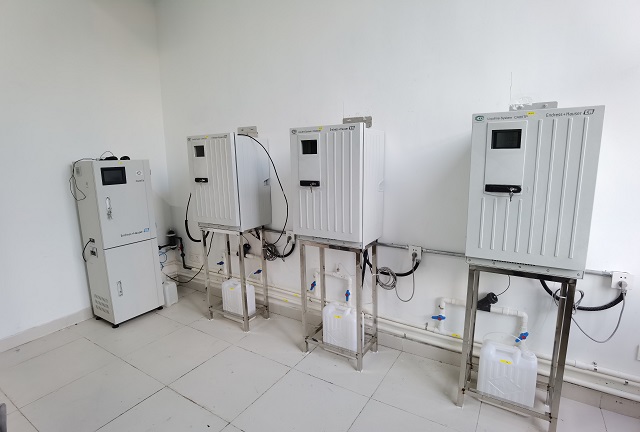
According to discharge standards and process control requirements, the system covers core indicators such as pH/SS, COD, ammonia nitrogen, total phosphorus, and total nitrogen. The specific instrument models and corresponding parameters are shown in the table below:
| Monitoring Parameter | Instrument Model | Remarks |
|---|---|---|
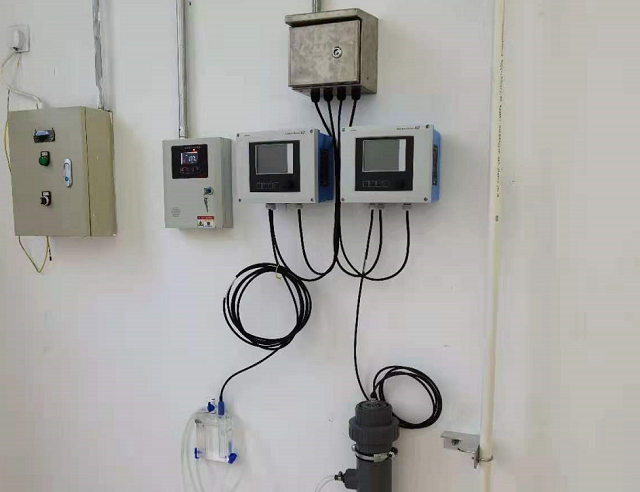
| pH/SS | CM442+CPS11D | pH and suspended solids concentration |
| COD | CA80COD | Online analysis of chemical oxygen demand |
| Ammonia nitrogen | CA80AM | Online analysis of ammonia nitrogen |
| Total phosphorus | CA80TP | Online analysis of total phosphorus |
| Total nitrogen | ZA80TN | Online analysis of total nitrogen |
| SS | CM442+CUS51D | Suspended solids concentration |
Instrument Operation Advantages and Value
This batch of instruments adopts a modular design and has automatic calibration and automatic cleaning functions, significantly reducing operation and maintenance workload. At the same time, the CM442 transmitter is paired with digital sensors to ensure accurate data transmission. After the system was put into operation, the effluent quality is controlled in real time, effectively preventing the risk of exceeding standards and helping the wastewater plant achieve refined operation.
- High reliability: Adapts to complex working conditions in wastewater plants and offers good long-term stability.
- Low maintenance: Intelligent diagnosis and self-cleaning reduce manual intervention.
- Data integration: Supports multiple communication protocols and can be easily integrated into the central control system.
Key Points for Installation and Commissioning
To ensure long-term accurate operation of the instruments, installation and commissioning should follow the steps below:
- Sampling point selection: Avoid bubbles and sediments to ensure representative water samples.
- Pipeline connection: Use corrosion-resistant materials to prevent leakage and contamination.
- Electrical wiring: Connect power and signal lines according to the manual and ensure proper grounding.
- Parameter setting: Configure the transmitter according to the range and alarm values.
- Calibration verification: Use standard solutions for zero point and range calibration.
Conclusion
The successful operation of online monitoring instruments in the Zhangzhou Dongdun Wastewater Phase II Project verifies the applicability of the CA80 series and CM442 series in large wastewater plants. Accurate monitoring data provides a solid foundation for process optimization and environmental supervision, and also provides a reference example for similar projects.