
What is ORP? Why is the measurement range -1500mV~1500mV?
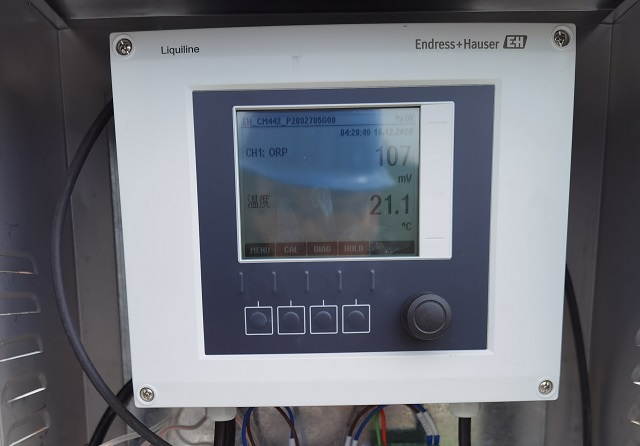
ORP (Oxidation-Reduction Potential) is an electrochemical indicator characterizing the relative degree of oxidizing or reducing properties of a medium, with the unit mV (millivolts). E+H ORP electrodes and transmitters can provide trend information on the disinfection capacity of tap water or swimming pools, aeration control in wastewater treatment plants, as well as electroplating bath detoxification or flue gas purification.
The reason ORP measurement values commonly have a -1500mV~1500mV range is that the oxidation-reduction capabilities of different substances in aqueous solutions vary greatly, and the potential span from strong reducing properties to strong oxidizing properties can reach several thousand millivolts. This range covers the vast majority of industrial and water treatment scenarios, facilitating unified comparison and trend judgment.
ORP Measurement Principle and Electrode Structure
ORP measurement consists of an ORP combination electrode and an mV meter. The ORP electrode is an electrode that can absorb or release electrons on the surface of its sensitive layer. This sensitive layer is an inert metal, usually made of platinum (CPS12D-7PA21) and gold (CPS12D-7NA21). The reference electrode, like the pH electrode, uses a silver/silver chloride electrode.
Working Characteristics of Redox Electrodes
Redox electrodes are noble metal electrodes used for potential measurement while not participating in chemical reaction processes, meaning they must withstand chemical impact. The core requirements are inertness, conductivity, and non-participation in reactions, thereby truly reflecting the electron transfer trend in the solution.
Comparison of Key ORP Electrode Components
| Component | Common Materials | Function |
|---|---|---|
| Sensitive layer (working electrode) | Platinum, gold | Absorbs or releases electrons, sensing oxidation-reduction potential |
| Reference electrode | Silver/silver chloride | Provides stable reference potential |
| Transmitter | mV meter | Measures and displays ORP value |
How Do ORP Values Reflect Water Quality Oxidation-Reduction Properties?
In water, each substance has its own oxidation-reduction characteristics. At the microscopic level, each different substance has a certain oxidation-reduction capability, and these substances with different oxidation-reduction properties can influence each other, ultimately forming a certain macroscopic oxidation-reduction property.
The so-called oxidation-reduction potential is used to reflect the macroscopic oxidation-reduction property of all substances in an aqueous solution. The judgment rules are as follows:
- The higher the oxidation-reduction potential, the stronger the oxidizing property;
- The lower the potential, the weaker the oxidizing property;
- A positive potential indicates that the solution exhibits a certain oxidizing property;
- A negative potential indicates that the solution exhibits a reducing property.
Typical Application Scenarios of ORP Measurement
- Tap water/swimming pool disinfection: Determine disinfectant residual and sterilization capacity through ORP.
- Wastewater treatment plant aeration control: Optimize aeration volume based on ORP trends to achieve energy savings and compliance.
- Electroplating bath detoxification: Monitor oxidation-reduction status to ensure treatment effectiveness.
- Flue gas purification: Track oxidation-reduction trends to assist process control.
Selection and Usage Recommendations
- Select platinum electrodes or gold electrodes based on medium characteristics to ensure the sensitive layer is not contaminated or passivated.
- Confirm that the transmitter range covers -1500mV~1500mV to meet strong oxidizing or strong reducing working conditions.
- Regularly clean and calibrate ORP electrodes; the reference electrode must maintain a clear liquid junction.
- Combine temperature compensation and pH value for comprehensive judgment to avoid misjudgment based on a single ORP value.
Correctly understanding the ORP measurement principle and range helps engineering technicians and procurement personnel select suitable E+H ORP electrodes and transmitters, improving process control reliability.