
Role of System Damping Time on Promag 50
System damping time is an important parameter in the Promag 50 electromagnetic flowmeter used to smooth the flow output signal. When pulsating flow, bubbles, or electromagnetic interference are present on site, the flow reading will fluctuate frequently, affecting measurement and control accuracy.
Appropriately increasing the damping time can effectively suppress signal fluctuations and make the output more stable. However, excessive damping will also slow down the response, so it needs to be set reasonably according to process requirements.
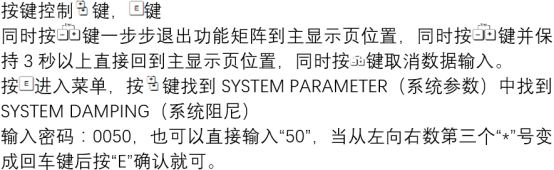
Steps to Increase System Damping Time
Enter the parameter setup menu
- Confirm that the Promag 50 is in measurement mode and that parameter access has been unlocked.
- Use the panel keys to enter the main menu and select the "Setup" or "Parameter" option.
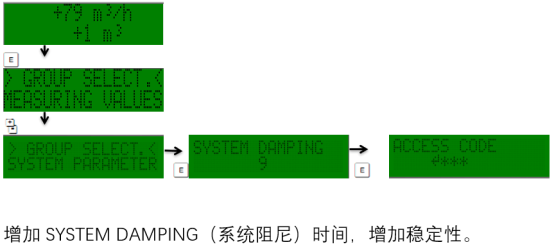
- Locate the "System Damping" or "Damping Time" parameter item.
Modify the damping time value
- Record the current damping time value as a reference before adjustment.
- Gradually increase the value according to process requirements; it is recommended to increase by 1~2 seconds each time.
- Save the setting and return to the measurement screen to observe whether the flow output is stable.
Recommendations and Comparison for Damping Time Settings
Different working conditions have different requirements for damping time. The table below can serve as a reference for on-site commissioning.
| Working Condition Type | Recommended Damping Time | Response Characteristics |
|---|---|---|
| Stable single-phase flow | 0~2 seconds | Fast response, good real-time performance |
| Slight pulsating flow | 3~5 seconds | Balances stability and response |
| Strong pulsation or containing bubbles | 6~10 seconds | Stable output, relatively slow response |
Precautions
- Increasing the damping time will reduce the response speed, so it is not suitable for fast shut-off or batch control applications.
- Interference sources such as grounding, shielding, and bubbles should be checked first before adjusting damping parameters.
- After adjustment, a zero point calibration is required to ensure measurement accuracy.
- It is recommended to save the parameter values before and after modification in the commissioning record for traceability.