What Is an Ultrasonic Flowmeter
Ultrasonic Flowmeter is an instrument that measures flow by utilizing the velocity changes caused by the flow of ultrasonic waves propagating in a fluid. It calculates the average fluid velocity by detecting the propagation time difference, phase difference, or frequency difference between downstream and upstream directions, thereby obtaining the flow rate. Because it requires no direct contact with the fluid and offers flexible installation, it is widely used in water supply and drainage, petrochemicals, metallurgy, power, water treatment, and other industries, especially suitable for measuring large-diameter pipes, highly corrosive, or high-viscosity fluids.
Working Principle
The core principle of ultrasonic flowmeters is based on the propagation characteristics of ultrasonic waves in flowing media, with the following three main measurement methods.
Time Difference Method (Most Commonly Used)
Two pairs of ultrasonic transducers (transmitter and receiver) are installed on both sides of the pipe to measure the propagation times t1 and t2 of ultrasonic waves downstream (same direction as the fluid) and upstream (opposite direction to the fluid), respectively.
Mathematical relationship:
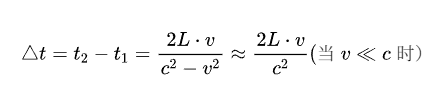
Where: △t is the time difference, L is the propagation path length of the ultrasonic wave in the fluid, v is the average fluid velocity, and c is the propagation speed of the ultrasonic wave in the stationary fluid.
Conclusion: The time difference △t is proportional to the flow velocity v, and the flow rate can be obtained through calculation.  (A is the cross-sectional area of the pipe).
Phase Difference Method
It measures by utilizing the relationship between the phase difference of downstream and upstream ultrasonic waves and the flow velocity. It is suitable for high-frequency ultrasonic scenarios but is susceptible to temperature and noise interference.
Frequency Difference Method (Doppler Method)
When the fluid contains suspended particles or bubbles, the ultrasonic waves reflected by the particles produce a Doppler frequency shift △f.
Mathematical relationship:
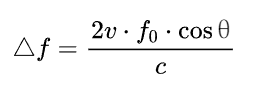
Where f0 is the transmitted ultrasonic frequency, and θ is the angle between the ultrasonic propagation direction and the fluid flow direction.
Application: Suitable for measuring fluids containing impurities (such as sewage, ore slurry). It does not require knowing the fluid sound speed, but its accuracy is lower than the time difference method.
Main Features
Advantages
- Non-contact measurement: No insertion into the pipe, no obstruction to the fluid, no pressure loss, suitable for valuable or hazardous fluids.
- Flexible installation: Supports clamp-on installation, no need to cut pipes, suitable for retrofitting existing pipelines.
- Wide measurement range: Can measure pipe diameters from a few millimeters to several meters, flow velocity range 0.01~25 m/s, turndown ratio up to 100:1.
- Applicable to various fluids: Can measure water, oil, gas, slurry, etc., especially suitable for corrosive, high-temperature, and high-viscosity fluids.
- Intelligent functions: Modern instruments support temperature compensation, empty pipe detection, data storage, and remote communication (such as HART, Modbus).
Disadvantages
- Dependence on fluid properties: The time difference method requires a uniform fluid (no bubbles or impurities), while the Doppler method requires the fluid to contain sufficient reflecting particles (≥100 ppm).
- Sound speed is significantly affected by temperature, requiring temperature compensation or known fluid sound speed.
- High installation requirements: Clamp-on types require a smooth pipe surface without scaling, and sufficient upstream and downstream straight pipe sections (upstream ≥10D, downstream ≥5D). Insertion types require the probe to be perpendicular to the pipe to avoid installation deviation affecting accuracy.
- Large error at low flow rates: When the flow velocity is below 0.3 m/s, the time difference measurement accuracy decreases, possibly requiring extended measurement time.
- Higher cost: Large-diameter or high-precision models are significantly more expensive than electromagnetic or vortex flowmeters.
Structure and Classification
Classification by Installation Method
- Clamp-on (non-intrusive): Transducers are clamped on the outer wall of the pipe, requiring no drilling and no contact with the fluid. Suitable for temporary measurement or processes that cannot be interrupted. Common types: Z method (for large pipe diameters), V method (for small pipe diameters), W method (multi-angle refraction to improve accuracy).
- Insertion (intrusive): Transducers are inserted into the pipe through flanges or threads, directly contacting the fluid. Higher accuracy, suitable for long-term online monitoring.
- Spool-piece (integrated): Transducers are integrated with the measuring pipe, requiring pipe cutting for installation. Highest accuracy, often used in standard metering scenarios.
Classification by Measurement Principle
- Time difference type: Used for clean or low-impurity fluids (such as water, oil).
- Doppler type: Used for fluids containing impurities or bubbles (such as sewage, ore slurry).
Classification by Application Scenario
- Industrial type: Used in high-temperature, high-pressure, corrosive environments (such as chemical pipes).
- Portable type: Supports quick on-site installation, used for temporary inspection or calibration (such as pipeline leak detection).
Application Scenarios
- Water supply, drainage, and water conservancy: Measure the flow of tap water, sewage, and river water, used for pipeline network monitoring, water resource metering, and inlet/outlet monitoring of wastewater treatment plants.
- Petrochemicals: Measure the flow of crude oil, chemical solutions, and slurries, especially suitable for non-contact measurement of highly corrosive media (such as sulfuric acid, sodium hydroxide).
- Power industry: Measure the flow of circulating water, condensate, and cooling water, monitoring the efficiency of generator cooling systems.
- Metallurgy and mining: Measure the flow of ore slurry and mineral powder suspensions, used in ore dressing processes and tailings treatment.
- HVAC systems: Measure the flow of chilled water and hot water in air conditioning, optimizing energy management and billing.
Key Installation and Maintenance Points
Key Installation Requirements
- Pipe conditions: Ensure the pipe is full of fluid (avoid empty or partially filled pipes). For clamp-on types, clean rust, paint, or insulation from the outer wall of the pipe.
- Straight pipe section selection: Choose a location with sufficient straight pipe sections (upstream ≥10D, downstream ≥5D), away from valves, elbows, pumps, and other disturbance sources.
- Transducer arrangement: For clamp-on types, select the appropriate installation method (Z method/V method) according to the pipe diameter, ensuring the two transducers are aligned and the sound path passes through the center of the pipe. For insertion types, install perpendicular to the pipe axis to avoid deflection causing sound path deviation.
- Temperature compensation: In high-temperature scenarios, use high-temperature resistant transducers or configure temperature sensors to correct sound speed errors in real time.
Maintenance Precautions
- Regularly check installation status: For clamp-on types, confirm that the transducers fit well with the pipe, without loosening or displacement.
- Clean impurities: For Doppler type instruments, if the fluid impurities decrease (e.g., sewage becomes clear), signal attenuation may occur, requiring re-evaluation of applicability.
- Calibration verification: Ensure accuracy through comparison with portable ultrasonic flowmeters or offline calibration (such as volumetric method). It is recommended at least once a year.
Summary
Ultrasonic flowmeters have become an important tool in industrial flow measurement due to their non-contact operation, adaptability to large pipe diameters, and versatility, especially with significant advantages in clamp-on installation and complex fluid scenarios. However, their performance is highly dependent on fluid properties, installation quality, and sound path conditions. When selecting a model, it is necessary to carefully evaluate the pipe condition, fluid composition, and accuracy requirements. With the development of digital signal processing technology, modern ultrasonic flowmeters can now reduce noise interference through intelligent algorithms, improving low-flow measurement stability and further expanding application scenarios.