COS61D Sensor Installation Methods Overview
COS61D is a commonly used sensor in industrial process measurement. Correct installation directly affects measurement accuracy and service life. This article focuses on the four key points of bracket selection, installation angle, pressure limits, and medium flow direction, outlining standard installation steps for reference by engineering technicians and procurement personnel.
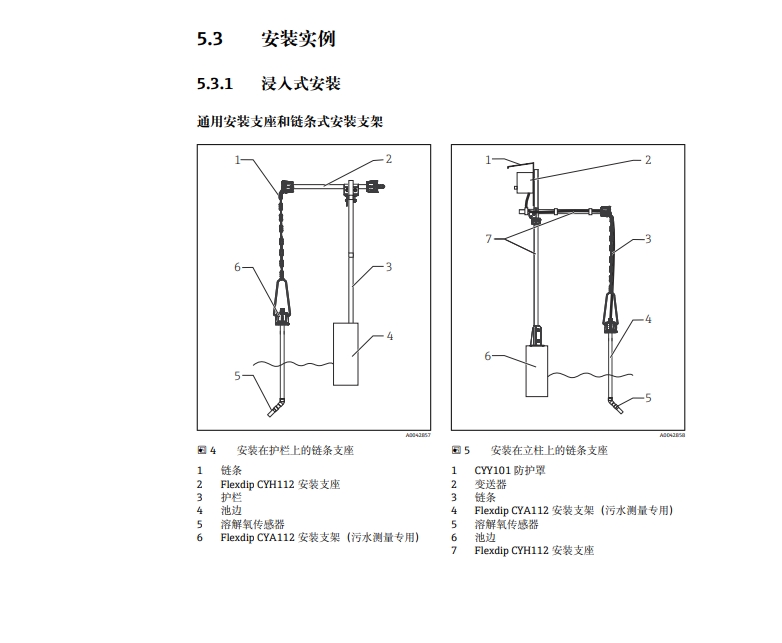
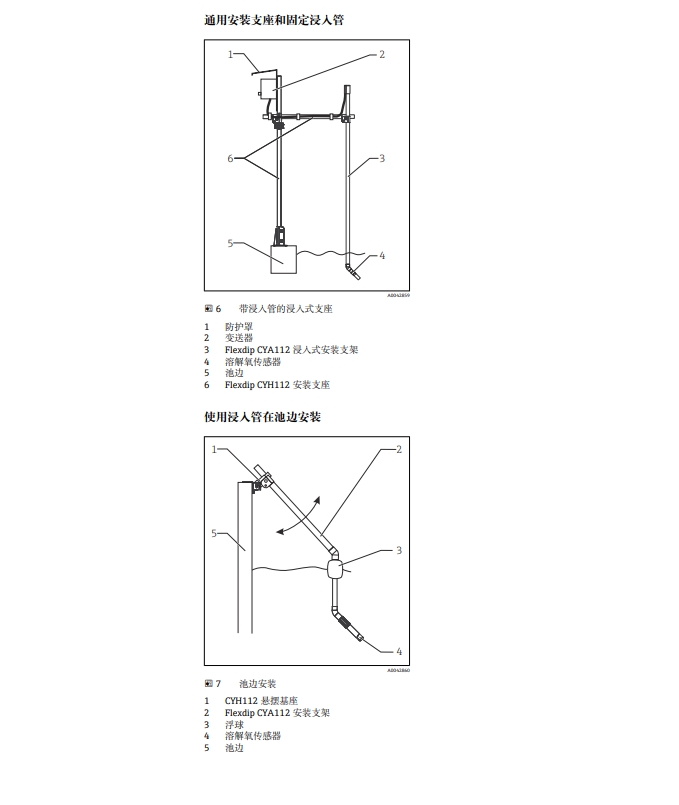
Mounting Bracket Selection and Use
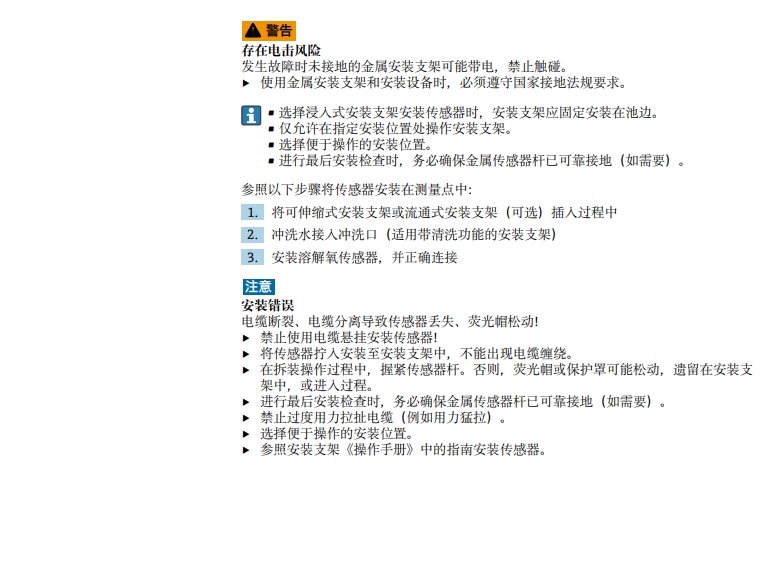
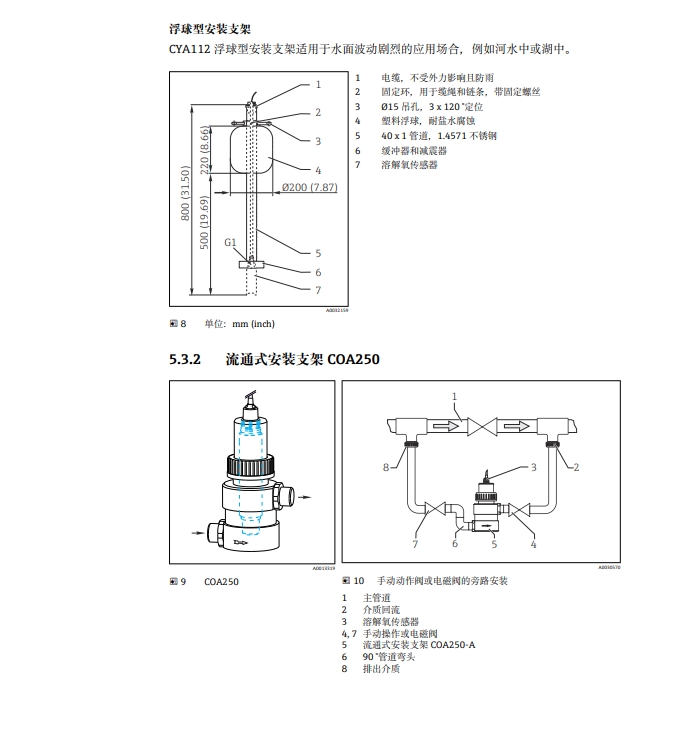
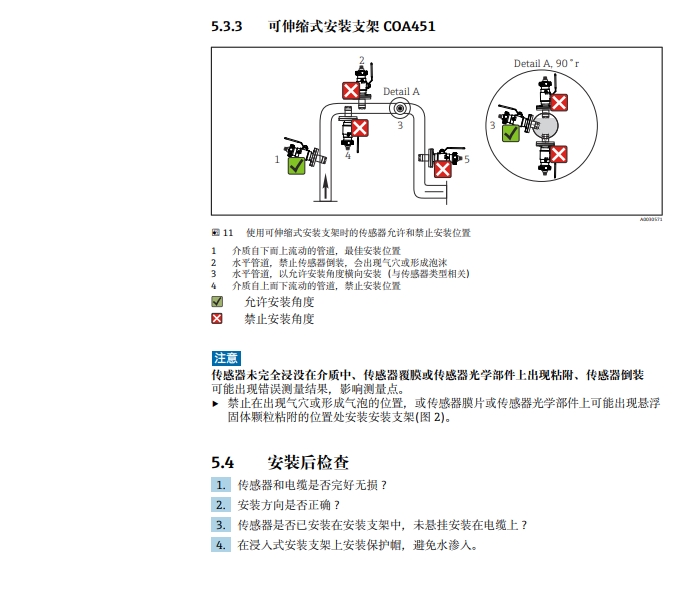
Retractable Mounting Bracket COA451
The retractable mounting bracket COA451 is a commonly used installation accessory for the COS61D, suitable for occasions requiring online disassembly or adjustment of insertion depth.
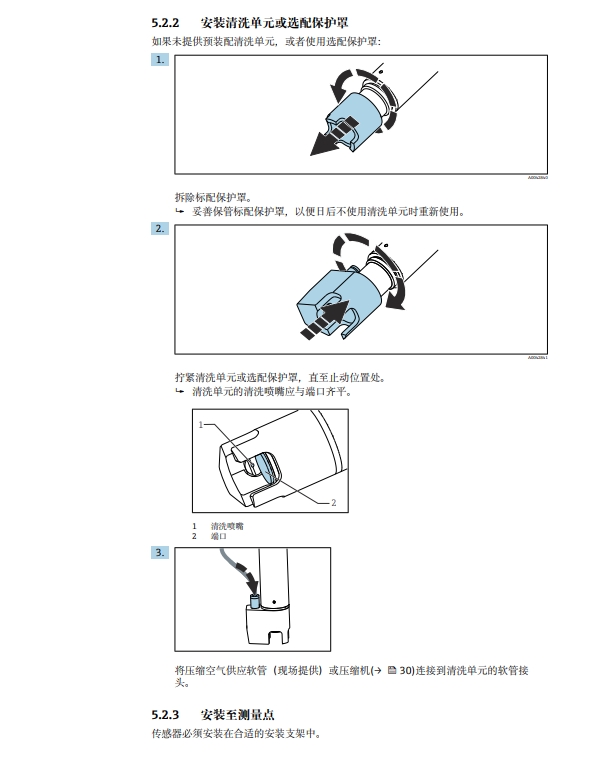
- Supports retractable installation, facilitating maintenance and calibration;
- Suitable for conventional industrial process piping and tank installation;
- Please confirm that the bracket matches the sensor interface before installation.
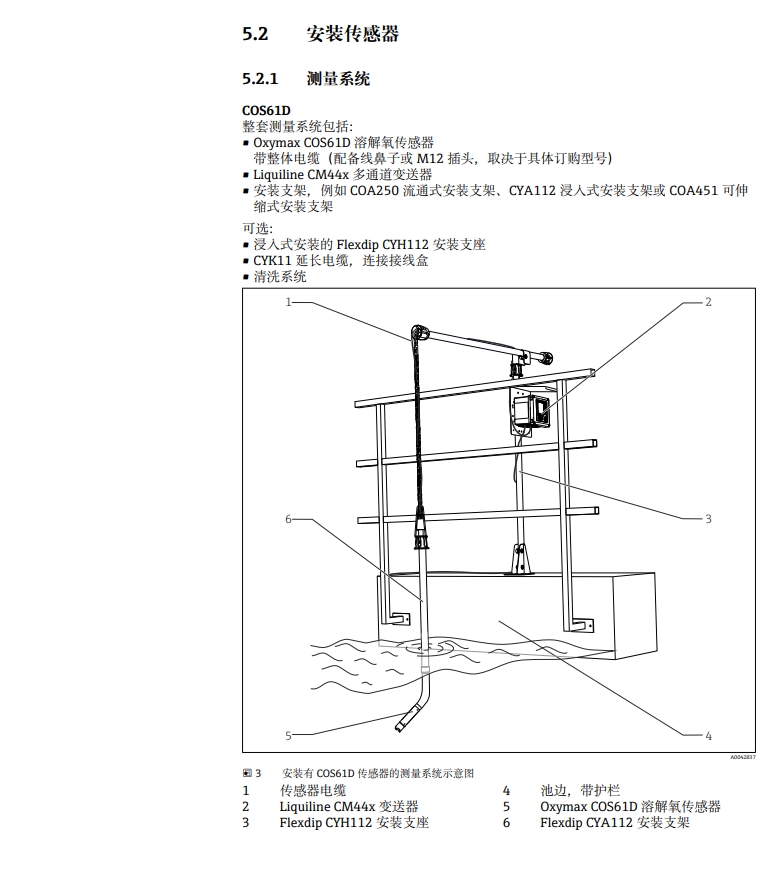
Dedicated Bracket for Wastewater Treatment CYA611
In wastewater treatment scenarios, the mounting bracket CYA611 is recommended. During installation, note that the arrow points in the direction of medium flow, ensuring the sensor measurement direction is consistent with the process.
- The arrow direction must be consistent with the medium flow direction;
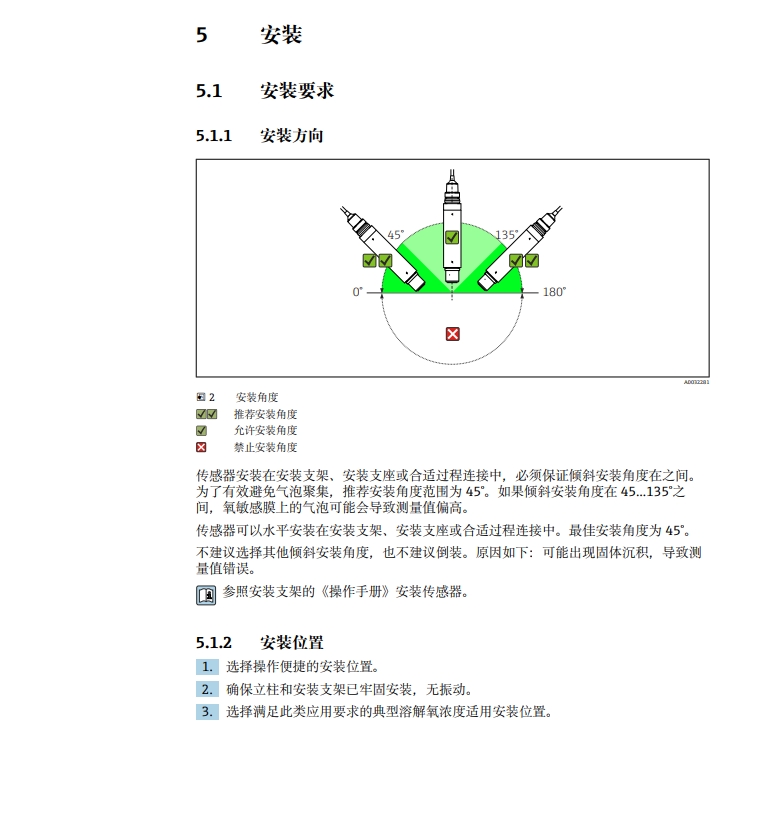
- The recommended installation angle is 45°, and 90° may also be selected depending on working conditions;
- Suitable for wastewater tanks, open channels, and other open or semi-open occasions.
Installation Angle and Pressure Limits
Installation Angle Requirements
The installation angle a must not exceed 90°, and the recommended installation angle a is 90°. A reasonable installation angle can avoid bubble accumulation and sediment coverage, ensuring measurement stability.
Medium Pressure Limits
When using manual installation or retractable mounting brackets, the medium pressure must not exceed 2 bar. Overpressure may cause seal failure or sensor damage. Be sure to verify working condition pressure before selection and installation.
Key Parameters Quick Reference Table
| Item | Requirement/Recommended Value | Description |
|---|---|---|
| Retractable bracket | COA451 | Suitable for occasions requiring online disassembly |
| Wastewater bracket | CYA611 | Arrow points in the medium flow direction |
| Installation angle a | ≤90°, recommended 90° | Avoid bubbles and sediment effects |
| Medium pressure | ≤2 bar | Manual or retractable bracket working conditions |
| Wastewater installation angle | 45° (recommended) or 90° | Select according to working conditions |
Recommended Installation Steps
- Confirm working condition pressure and medium flow direction, and select the appropriate bracket (COA451 or CYA611).
- Fix the bracket at the recommended angle, ensuring the installation angle a does not exceed 90°.
- Install the COS61D into the bracket, ensuring the sensor direction is consistent with the flow direction.
- Check sealing and fastening, and confirm the medium pressure does not exceed 2 bar.
- Power on and commission, observing whether the measured value is stable.
Precautions and Technical Support
For more information on COS61D installation methods, it is recommended to consult the sensor operating instructions or contact professional technical personnel. Correct installation angle, pressure control, and bracket selection are key to ensuring long-term stable measurement.
Frequently Asked Questions (FAQ)
What brackets can be used to install the COS61D?
The commonly used retractable bracket is COA451, and CYA611 is recommended for wastewater treatment scenarios.
Are there mandatory requirements for the installation angle?
The installation angle a must not exceed 90°, with 90° recommended; 45° is recommended for the wastewater bracket.
What is the maximum medium pressure?
When using manual or retractable brackets, the medium pressure must not exceed 2 bar.