
Overview of Promass 10 Alarm Codes
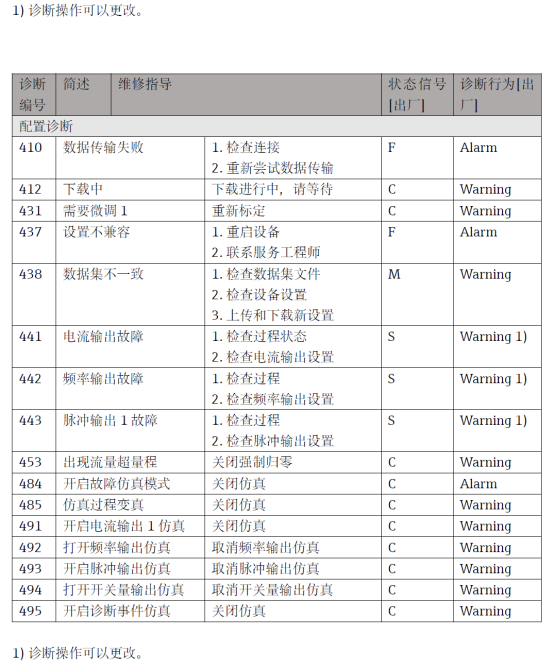
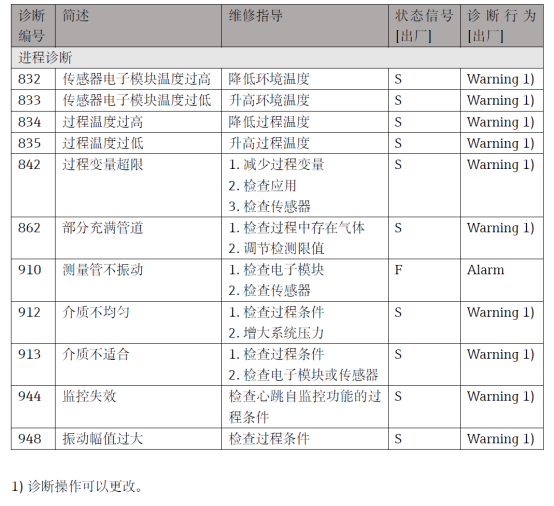
Promass 10 is a Coriolis mass flowmeter launched by Endress+Hauser, widely used in industrial process measurement. When the instrument detects an abnormality, it triggers an alarm code and displays it on the screen or output signal. Understanding these codes helps quickly locate faults and reduce downtime.
This article summarizes common alarm codes and their handling methods for the Promass 10, for reference by engineering technicians and procurement personnel. Please note that specific codes may vary slightly depending on the instrument version and configuration; it is recommended to use them in conjunction with the device manual.
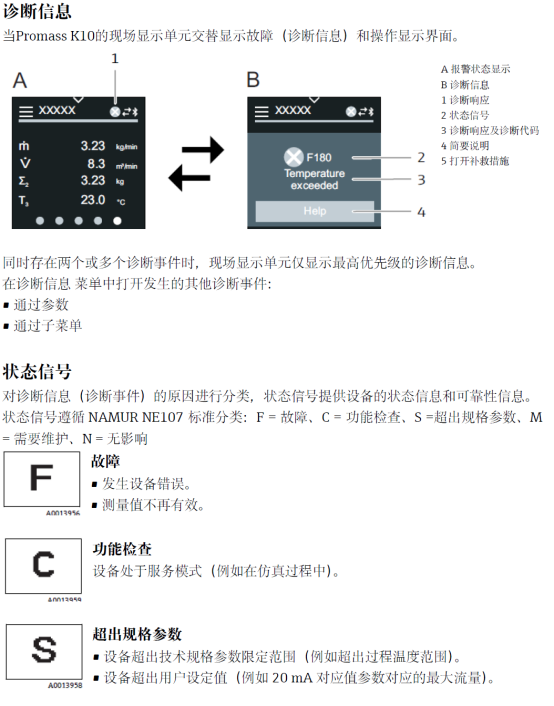
[Click image to enlarge]
Common Alarm Codes and Meanings
The following lists frequently occurring alarm codes in the Promass 10 series and explains their trigger conditions. Each code corresponds to a specific fault type and requires further diagnosis based on the site conditions.
Alarm Code List
| Alarm Code | Description | Possible Cause |
|---|---|---|
| F001 | Sensor signal loss | Sensor cable disconnected, sensor damaged |
| F002 | Measuring tube empty | Pipe not full, medium contains gas |
| F003 | Temperature out of range | Medium temperature too high or too low |
| F004 | Excitation current abnormal | Drive coil fault, circuit board issue |
| F005 | Zero point drift | Installation stress, valve leakage |
| F006 | Electronic component fault | Amplifier board, I/O board fault |
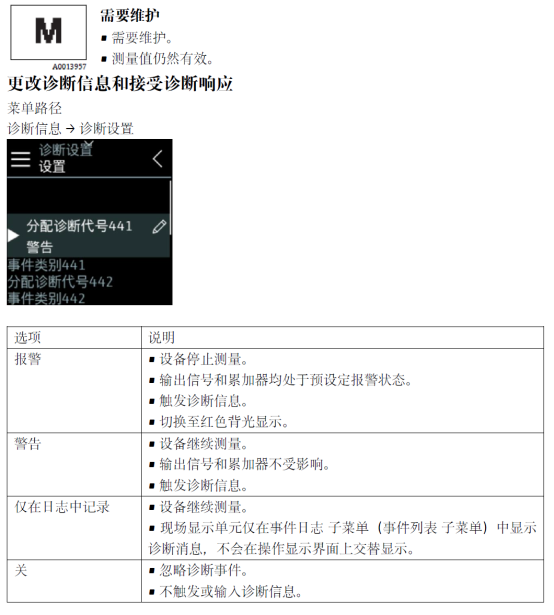
[Click image to enlarge]
Alarm Code Diagnosis Steps
When an alarm occurs, it is recommended to troubleshoot according to the following process to avoid blind operations. First confirm the alarm code, then check the process conditions, and finally perform hardware tests.
General Troubleshooting Process
- Record the alarm code: Check the display or read the specific code via HART/Modbus.
- Check process parameters: Confirm whether flow, temperature, and pressure are within the allowed range.
- Check installation status: Ensure the sensor is correctly installed, with no stress or empty pipe.
- Check electrical connections: Verify that cables and terminals are secure.
- Use diagnostic tools: Perform detailed diagnostics via FieldCare or a handheld communicator.
- Contact technical support: If unable to resolve, provide the alarm code and site information.
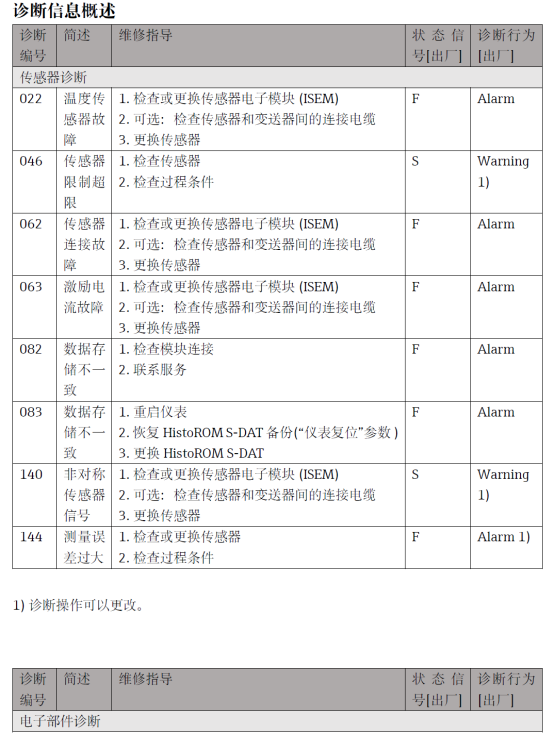
[Click image to enlarge]
Typical Fault Handling and Prevention
For high-frequency alarms, taking correct measures can quickly restore measurement. At the same time, regular maintenance can effectively prevent faults from occurring.
F001 Sensor Signal Loss
- Check whether the sensor cable is damaged, and reinsert the connector.
- Measure the sensor coil resistance to determine if it is damaged.
- If the sensor is faulty, replace the sensor.
F002 Measuring Tube Empty
- Confirm that the pipe is full of medium and eliminate bubbles.
- Check the installation position to avoid pipe drainage.
- Adjust the installation method to ensure a full pipe.
Preventive Maintenance Recommendations
- Perform zero calibration regularly.
- Check the sealing of cables and connectors.
- Keep the instrument clean to avoid corrosion.
- Record historical alarms and analyze trends.
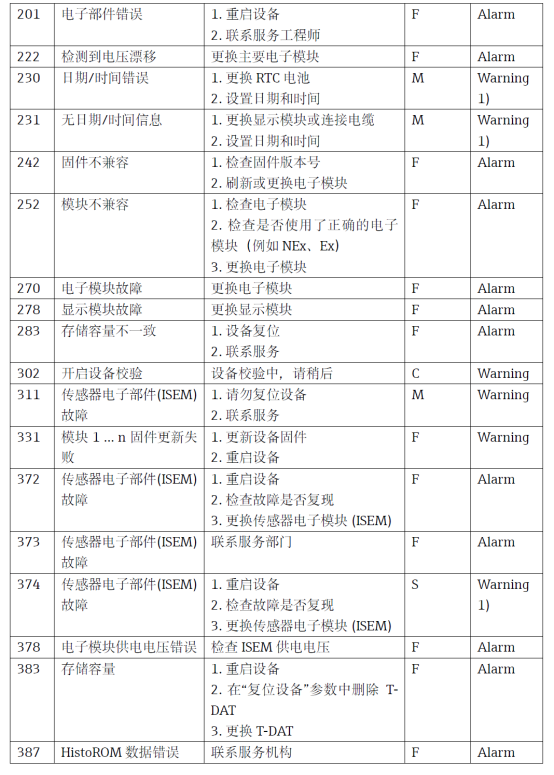
[Click image to enlarge]
Alarm Code Quick Reference and Summary
For on-site convenience, the table below summarizes the urgency and handling priority of Promass 10 alarm codes.
| Alarm Code | Urgency | Handling Priority |
|---|---|---|
| F001 | High | Handle immediately |
| F002 | Medium | Handle as soon as possible |
| F003 | Low | Schedule handling |
| F004 | High | Handle immediately |
| F005 | Medium | Handle as soon as possible |
| F006 | High | Handle immediately |
Correctly understanding and handling Promass 10 alarm codes can significantly improve equipment reliability. For more information, please refer to the official manual or contact the supplier.
[Click image to enlarge]
[Click image to enlarge]