
E+H Instrument Selection: Output, Input, and Power Supply
After determining the explosion-proof rating of the instrument, the next step is to select parameters such as output, input, and power supply. These parameters directly affect the signal transmission method, system compatibility, and power supply scheme, and are core aspects of the selection process.
Output Types and Communication Protocols
Output refers to the connection method and communication protocol for the instrument's power supply signal transmission. It can be divided into three types:
- Pure analog (0/4...20mA): Uses cables to transmit current signals; one channel can only transmit one parameter. Simple wiring but limited functionality.
- Bus (Profibus PA/DP): Connects multiple devices with one cable, can transmit multiple parameters simultaneously, and supports remote parameter adjustment; DP is not explosion-proof.
- Analog + HART: Transmits parameters and allows remote parameter adjustment or fault viewing, compatible with legacy systems.
For the number of output channels, 1x means 1 output, 2x means 2 outputs. The basic value is the core measurement parameter and must be transmitted; the additional value is optional supplementary information.
Input Signal Types
Input signals include the following common types:
- 4-20mA SIL HART: 4-20mA analog current signal transmits the core measurement value; SIL is Safety Integrity Level certification; HART superimposes a digital signal on the 4-20mA signal, allowing simultaneous transmission of measurement values and device status, and supports remote calibration.
- Frequency signal: Transmits data via pulse frequency, suitable for rapidly changing parameters, with better anti-interference capability than analog signals.
- Status input/output: Status output reflects the device's own status; status input receives external switch signals to achieve linkage control between the device and external systems.
- PROFIBUS PA/DP: PA is suitable for process automation, supports explosion-proof areas, can connect multiple devices, and transmit multiple data sets; DP is suitable for factory automation, with fast transmission speed and strong real-time performance, but is not explosion-proof.
- Active/Passive Ex-i: Active means the device itself supplies power to the signal loop; passive means the signal loop requires external power, more energy-efficient, suitable for low-power scenarios in explosion-proof areas (Ex-i indicates intrinsically safe, suitable for explosion-proof areas).
Power Supply Methods
There are mainly three power supply methods:
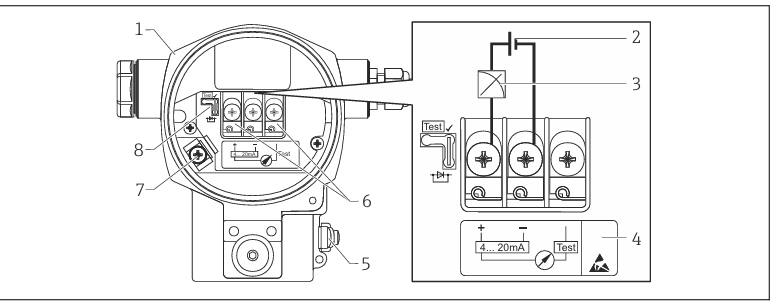
- 2-wire: Uses two wires to power the instrument and transmit data, simple wiring, suitable for intrinsic safety explosion-proof.
- 3-wire: Adds one power wire to the 2-wire system, separating power supply and signal transmission.
- 4-wire: Two power wires and two signal wires, achieving full duplex, but high wiring cost.
Signal Transmission Methods
Signal transmission methods include analog signals, digital signals, and hybrid signals:
- 4-20mA analog signal: Uses DC current signal to correspond to the measured value; it is the standard analog signal in the industrial field and is most commonly used.
- HART protocol: Superimposes a high-frequency digital signal on the 4-20mA analog signal to achieve intelligent communication.
- Pure analog signal: Such as 0-10V DC / 0-5V DC voltage signals; simple wiring but short transmission distance, poor anti-interference, and no intelligent functions; now gradually being phased out.
- Pure digital signal: Such as Modbus (RTU/TCP), PROFINET, Foundation Fieldbus (FF), EtherNet/IP; can network and control multiple devices, with relatively fast transmission speed.
Power Supply Specifications
Power supply specifications should be selected according to on-site power supply conditions:
- 85-260VAC: Wide-range AC power, compatible with mains electricity in most regions worldwide (e.g., 220V in China, 230V in Europe, 110V in the US), eliminating the need to distinguish regional voltages.
- 20-55VAC / 16-62VDC: AC/DC wide-range compatibility, can connect to low-voltage AC or low-voltage DC, suitable for centralized power supply scenarios in industrial control cabinets.
CSA Gen.Purp is a general certification complying with North American electrical safety standards.
Display and Housing Configuration
The display and housing configuration of the instrument affects operational convenience and service life. A reasonable display method simplifies commissioning, while housing protection ensures stable operation in harsh environments.
Display and Operation Configuration
The device offers a rich variety of display and operation configurations to meet different scenario needs:
- With local display and operation: Equipped with a "2-line display + physical buttons", convenient for on-site data viewing and parameter setting, suitable for scenarios requiring on-site operation.
- Without local display and operation: No local display or buttons; parameters need to be set remotely via a central control system or dedicated software, suitable for installation locations inconvenient for on-site operation.
Display Screen Types
There are various types of device display screens, as follows:
- Basic display category: Includes seven-segment character display (no buttons), and seven-segment character display (no buttons, with Bluetooth wireless connectivity).
- Advanced interaction category: Includes graphic display (touch key operation), and graphic display (touch key operation, with Bluetooth wireless connectivity).
- Special adaptation category: The device can also be selected without on-site display; if needed, a display accessory can be added separately.
Color display means the device's screen has the ability to present multiple colors, displaying various information more clearly and intuitively.
On-site Envelope Curve Display
The envelope curve, as a core technical parameter of level measurement instruments, reflects the waveform of the instrument's transmitted signal and the reflected signal from the measured medium, and is of great significance for the accuracy and analysis of level measurement.
Interactive Operation Methods
Interactive operation methods include:
- No buttons: The device eliminates traditional physical buttons and uses touch screens, virtual buttons, pressure sensing, voice control, etc., for interactive operation, making operation more technological and convenient.
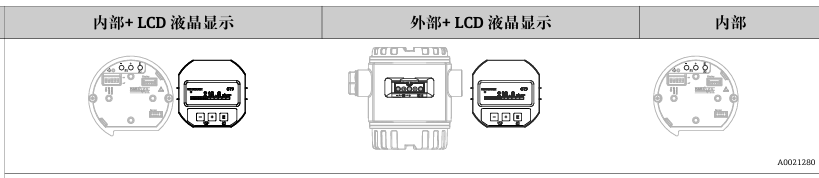
- Buttons with display: Various combinations of buttons and display, including internal operation buttons + LCD screen, external operation buttons + LCD screen, and internal operation buttons only, selectable according to actual needs.
Blind Cover Function
The blind cover protects the relevant circuits and prevents accidental operation, ensuring the safety and stability of device use.
Display Language Versions
The device supports multiple display language versions, flexibly selectable according to the region of use:
- WEA: Covers Western European and global common languages, suitable for Europe, Latin America, etc.
- SEA: Covers Southeast Asian and Japanese language regions, suitable for Japan, Indonesia, and other Southeast Asian countries.
- EES: Covers Eastern European and Nordic languages, suitable for Russia, Poland, Nordic regions, etc.
Sensor Application and Selection
The sensor is the core measurement component of the instrument; its measurement category, material, range, and calibration accuracy directly affect measurement performance. The following introduces the key points for selecting sensor-related parameters.
Measurement Category: Gauge Pressure and Absolute Pressure
Sensor measurement categories are divided into two types:
- Gauge pressure: Uses local atmospheric pressure as the reference; measures the difference between the measured pressure and atmospheric pressure.
- Absolute pressure: Uses absolute vacuum as the reference; measures the actual pressure value of the measured system.
Electrode Material and Diaphragm
Sensor electrode materials are similar to diaphragm materials; bullethead means the electrode shape is bullet-shaped, which can reduce the adhesion of high-viscosity and highly corrosive media.
Its applications are divided into two types:
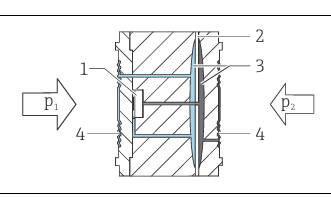
- Standard: The pressure instrument's sensor directly contacts the measured medium; the pressure of the measured medium acts directly on the sensor's sensitive element, converting the deformation of the sensitive element into an electrical signal or mechanical displacement, ultimately outputting the measurement value.
- Diaphragm seal: Also called isolated type; a flexible isolation diaphragm and filling liquid chamber are added between the pressure sensor and the measured medium. The measured medium presses the isolation diaphragm, transferring pressure to the filling liquid, which then conducts the pressure to the sensor's sensitive element.
Diaphragm Types
Diaphragm types mainly include the following:
- None: The temperature sensor directly contacts the measured medium.
- Direct type: The temperature sensor and the "sealing diaphragm/heat-conducting base" form an integrated structure in close contact; the heat of the measured medium is directly conducted through the path "medium → sealing diaphragm → heat-conducting base → sensor".
- Temperature isolation type: The sensor is separated from the measured medium by components such as a sealing diaphragm, while ensuring that heat can be effectively transferred to the sensor, thereby achieving accurate temperature measurement.
Sensor Range and Calibration Units
Sensor ranges are divided into six cases, selectable by the user according to the working environment:
| Range | Pressure Value |
|---|---|
| Low pressure | 1bar / 100kPa / 15psi |
| Medium-low pressure | 4bar / 400kPa / 60psi |
| Medium pressure | 10bar / 1MPa / 150psi |
| Medium-high pressure | 40bar / 4MPa / 600psi |
| High pressure | 100bar / 10MPa / 1500psi |
| Ultra-high pressure | 400bar / 40MPa / 6000psi |
Sensor calibration units include: % (percentage of range), mbar/bar (millibar/bar), kPa/MPa (kilopascal/megapascal), mmH₂O/mH₂O (millimeter water column/meter water column), inH₂O/ftH₂O (inch water column/foot water column), psi (pounds per square inch).
Electrode Selection Steps
If an electrode needs to be selected, proceed as follows:
- First check whether the working condition requires Memosens digital: choose digital for strong interference, frequent sensor replacement, or remote diagnostics; choose analog electrode for simple conditions, no interference, and infrequent sensor replacement.
- Then determine the pH electrode type: choose glass electrode for clean media and high precision (±0.01pH); choose ISFET electrode for media containing particles/oil, prone to collision, or containing fluorine.
- Then determine whether additional functions are needed: choose digital additional or analog additional for large temperature fluctuations, data traceability, or fault alarms; choose digital basic or analog basic for normal temperature, no traceability requirements, and manual inspection.
Calibration Accuracy and Calibration Traceability
Calibration accuracy has two options: 0.2% and 0.5%, representing the required accuracy level. Calibration traceability includes:
- 3-point calibration: Calibrates at the "low, medium, high" range points of the instrument, more comprehensive than single-point calibration, covering the accuracy of the entire measurement range.
- Traceable to ISO/IEC17025: The calibration process is completed by a laboratory compliant with the ISO/IEC17025 international standard, providing greater authority and reliability.
- Factory 5-point/10-point calibration certificate: Calibrates the device at 5 or 10 different measurement points; the more points, the more meticulous the calibration accuracy control.
- Platinum level: May indicate that the device has achieved a higher accuracy or quality level; such devices perform better in measurement accuracy, stability, etc.
Diaphragm Material Selection
The sensor diaphragm material directly affects corrosion resistance; common materials are as follows:
| Material | Characteristics |
|---|---|
| 316L stainless steel | General corrosion-resistant material, compliant with international standards, can handle most conventional corrosive environments. |
| Alloy C276 (Hastelloy C276) | High-end corrosion-resistant material, specifically designed for highly corrosive scenarios, can withstand harsh corrosive media such as strong acids and alkalis. |
| Monel (Monel/Alloy400) | Good corrosion resistance, suitable for various corrosive media environments. |
| Tantalum (Ta) | Silver-white metal element with excellent corrosion resistance, can resist various highly corrosive media. |
| Duplex stainless steel | Corrosion resistance close to 316L stainless steel, while also offering certain strength advantages. |
| Super duplex stainless steel | Superior to conventional duplex stainless steel (e.g., 1.4462) in both corrosion resistance and strength. |
| 904L super austenitic stainless steel | High nickel content (23-28%), excellent corrosion resistance, suitable for highly corrosive working conditions. |
| Pure nickel | Good corrosion resistance to strong alkalis (e.g., concentrated sodium hydroxide). |
| Pure titanium | Can withstand corrosion from seawater, chlorine gas, and dilute acids (e.g., dilute hydrochloric acid). |
The corrosion resistance and performance of coated diaphragms, from best to worst, are: Rhodium (Rhodium) > Gold (Gold) > Hastelloy C (Alloy C).
Diaphragm Seal Configuration with Temperature Adaptation (TempC)
TempC stands for temperature compatibility, meaning that the diaphragm seal unit, through temperature compensation design or the use of temperature-resistant materials and filling liquids, can operate stably within a specific temperature range without damage. Depending on the filling liquid, common temperature ranges are divided into:
- Normal temperature type: -20℃~80℃
- Medium temperature type: -50℃~200℃
- High temperature type: 200℃~400℃
The core function of the diaphragm seal is to isolate the measured medium from the sensor. A diaphragm seal made of 316L material combined with TempC design ensures that under medium corrosion and specific temperature conditions, the diaphragm will not corrode, and the filling liquid will not solidify or vaporize, thus ensuring accurate pressure transmission.
The above parameters involve various aspects of instrument operation and can be selected according to actual working conditions and requirements.