
Overview of Promass 80 Alarm Status Current Output Settings
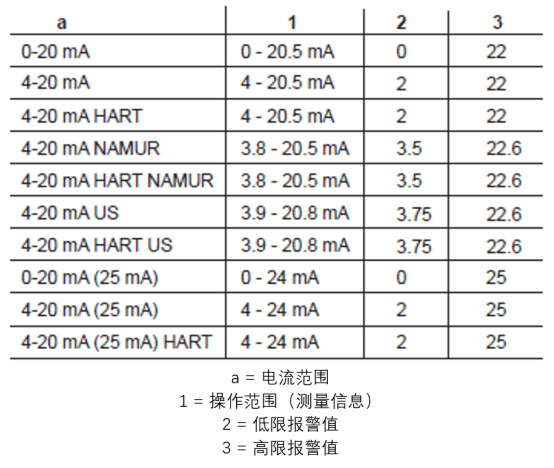
For the Promass 80 series flowmeter, the current output behavior in alarm status can be configured through parameters. Correct settings ensure system safety and compliance with NAMUR standards. This article introduces four optional modes and their applicable scenarios.
[Click image to enlarge]
Detailed Explanation of Alarm Status Current Output Modes
The Promass 80 provides four alarm current output modes, which users can select according to process requirements.
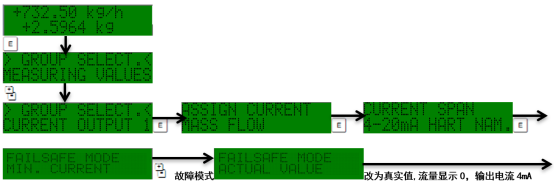
- MIN. CURRENT VALUE: Outputs a preset minimum current value during alarm, factory default is 3.5mA.
- MAX. CURRENT VALUE: Outputs a preset maximum current value during alarm, typically 22mA or 21mA.
- HOLD VALUE: Holds the last valid current value before the alarm during alarm.
- ACTUAL VALUE: Continues to output the current corresponding to the actual measurement value during alarm, without any correction.
Fault Mode Factory Settings and NAMUR Standards
Default Minimum Current Value Setting
When CURRENT SPAN is set to 4-20mA HART NAMUR, the factory setting in alarm status is MIN. CURRENT VALUE, and the current output is 3.5mA. This setting complies with NAMUR NE43 recommendations for indicating faults.
Notes for Other Ranges
If the current range is not NAMUR standard, the alarm output may differ; please refer to the configuration for the specific range. It is recommended to confirm the alarm current value during commissioning to avoid confusion with normal signals.
[Click image to enlarge]
Comparison and Selection Recommendations for Alarm Current Output Modes
| Mode | Output Current | Applicable Scenario |
|---|---|---|
| MIN. CURRENT VALUE | 3.5mA (default) | Complies with NAMUR standards, fail-safe indication |
| MAX. CURRENT VALUE | 22mA (typical) | Occasions requiring high current alarm |
| HOLD VALUE | Holds last value | Avoids current sudden changes affecting control during alarm |
| ACTUAL VALUE | Actual measurement value | Requires continuous monitoring of actual value |
When selecting, consider system safety requirements, controller compatibility, and process continuity. It is generally recommended to use MIN. CURRENT VALUE to quickly identify faults.